Fall Tips
WHY? Not only will this lower your energy bills, but energy production from coal, oil and natural gas is one of the leading causes of greenhouse gases that contribute to global climate change. In the Northwest, these climate shifts appear to reduce our snow pack and water supplies, cause more-frequent damaging storms and have other serious consequences.
HOW?
WHY? Cars generate air pollution that threatens human health and polluted runoff that affects stream health. Motor vehicles are responsible for a majority of the greenhouse-gas emissions in Washington that are contributing to climate change. Beyond the frustrations of gridlock, the increasing numbers of cars mean more paved roads and parking lots. This can lead to faster rain runoff and greater chance of floods, while decreasing groundwater recharge and flushing even more pollution into streams. Besides, gas is growing more expensive in more ways than one.
HOW? Research and purchase a fuel-efficient vehicle, use at least 5 percent biodeisel fuel or join a flex-car program. (Flex-cars can save lots of money by reducing gas, insurance and car payments to nearly nothing.) Carpool or take the bus, walk or bike to work or school one more days a week. Telework from home, if possible, or work a flex schedule. Combine chores into one trip around town.
WHY? When you leave your car or truck running while it’s parked or sitting still, the engine produces air pollution. This pollution contributes to problems like smog and global warming, besides being harmful to health. It is more gas-efficient to turn off most warmed-up vehicles than to idle for more than 30 seconds.
Idling exhaust is especially hazardous to children around schools, as parents and buses wait for kids. Carbon monoxide reduces the ability of blood to bring oxygen to body cells and tissues. Children’s asthma symptoms increase as a result of car exhaust and asthma is the third-leading cause of hospitalization in children aged 14 and younger. The risk of death is 17 percent higher in more polluted areas. Asthma is the most common chronic illness in children and the cause of most school absences.
HOW? A brief warm-up period upon starting a cold car may be necessary, but idling at every waiting location is not. To reduce air quality and health problems, it is recommended that you idle your vehicle no longer than 30 seconds -- not only around schools, but everywhere you drive. For more information on cars and buses, see EPA’s anti-idling Web site.
WHY? Wet wood burns incompletely and releases more pollutants into the air. Not only does this smoke end up drifting toward your neighbors, but it can settle around your own house and be drawn back into your home. Respiratory diseases (like asthma) are a serious and growing health threat, and tiny particulates and pollution in wood smoke are among the causes. Burn bans are called when air-pollution levels become unhealthy to prevent a bad situation from becoming worse. And a clean chimney prevents house fires.
HOW? Burn only seasoned wood that has been drying for at least 6 months to a year. (Dry wood feels lighter when you lift it than wet, heavier wood. It snaps and crackles as it burns in a hot fire, while wet wood hisses and generates a lower-temperature fire.) To check for burn bans, consult your local newspaper or radio station, call your local air-pollution control authority. To see air quality at near-real time in your vicinity, click here.
WHY? Burn barrels don't burn very efficiently, thus generating a lot of smoke toxins, including dioxins. Even worse, almost all those pollutants are released close to the ground, where they are easily inhaled. Long-term health problems associated with toxic pollution include cancer, leukemia, asthma, immune system changes, learning disorders, birth defects and infertility. Also, burn barrels are illegal in Washington.
HOW? If you have a burn barrel, dispose of it. Re-use products and packaging as much as possible. Donate unwanted clothing, furniture and toys to friends or charities. Give unwanted magazines to hospitals or nursing homes. Recycle newspaper, plastic, glass and metal. Use a chipper to grind up branches and yard waste for mulch or compost. Compost your kitchen wastes. As a last resort, have your household waste picked up by a licensed waste-removal company or take it to a licensed disposal facility (landfill or incinerator). Never burn plastics or Styrofoam, as their smoke is extremely toxic.
WHY? Recycling saves resources, energy and landfill space and reduces air and water pollution. Paper comes from your forests and is often discarded to landfills after one use. This can waste landfill space and trees or forests that prevent floods, provide wildlife habitat, and protect your watersheds, streams and drinking water.
Metals refined from mining ore leave poisonous mine tailings and require more energy to produce than re-refined, recycled metals. Careless dumping of used oil results in more annual pollution than the Exxon-Valdez oil spill. Oil never wears out, it just gets dirty. So recycling used oil and buying re-refined oil, as opposed to carelessly discarding it, prevents pollution while conserving a finite resource.
HOW? Call 800-RECYCLE or click here to find locations near you.
WHY? Recycling is a continuous loop that works only if the collected materials are turned into products, bought and used again. Buying products made from recycled materials supports the markets for these products and keeps the cycle going.
HOW? Many items can be purchased with recycled content, so look for the recycling symbol when you shop. For instance, recycled paper products include tissues, paper towels, greeting cards, writing paper and computer paper. Fleece jackets, carpets and decking are made from recycled plastics. Some kitty litter comes from recycled paper. Re-refined oil is available. There are many other recycled items, so just look for them, or ask the store to carry them.
WHY? Especially in cooler months, your house is closed more airtight. Toxic products can concentrate fumes in the air you breathe and harm your health. Young children can be especially vulnerable to these effects. Water down your drain also carries residues from your home, and many harsh household chemicals are not removed by sewage-treatment or septic systems. These waters later empty to underground water, rivers or Puget Sound. (Do you know the source of your drinking water and where your household drains go?)
HOW? Use safer cleaning products such as baking soda, borax and vinegar. Use baking soda to scrub. Vinegar makes good window wash (mix 1/4 cup with 1 quart warm water).
WHY? To avoid accidental poisoning, especially in children.
HOW? Store cleansers and other chemicals in cupboards that are inaccessible to children, in original labeled containers with lids, inside a larger container that would hold any spills, and far away from any drinking-water wells.
WHY? To avoid inadvertently polluting your water, air, soil or health.
HOW? Call 800-RECYCLE or visit Ecology's recycling site.
WHY? Saves resources that made those items, re-uses or recycles them into further use, reduces the cost to buy "new," and saves landfill space. This is an especially good time of year to donate to those less fortunate.
HOW? If you have large or small quantities of used or surplus building materials or large household items, post them on the 2good2toss Web site. (Check the Web site to see if you live in a participating community. If not, call your local garbage service or recycling coordinator to find out about re-use opportunities in your community.) Give clothing, toys or sporting goods to local charities.
WHY? Although properly used and maintained septic tanks can be safe and efficient, poorly located or neglected septic systems can pose a serious threat to drinking-water wells, your family's health, vegetable gardens, or nearby streams and lakes
HOW? Inspect your septic tank and have it pumped every three years or as necessary. Don't use septic-tank cleaning compounds or additives, since they can damage the system. Watch for signs of failure (standing water, foul orders, lush growth and backed-up toilets or drains). Install water-saving devices in your house to prolong the life of your septic drain field. Avoid overloading the system by spreading water-intensive chores (like laundry) throughout the week. Limit or avoid the use of garbage disposals; compost your kitchen waste instead (except for animal products, meats, etc.).
WHY? Single-use bags are a waste of trees (paper) or fossil fuels (plastic). They contribute to water pollution during production and landfill overload at disposal. Re-usable cloth or paper bags reduce these problems.
HOW? Purchase sturdy, light-weight, re-usable cloth bags and remember to carry them with you in the grocery store or shopping. One way to remember your bags is to keep your shopping list in them, hung by the door, or keep spares in your vehicle, purse or case. Many Europeans shop this way and we can, too.
WHY? Rather than scrambling to perpetuate increasingly consumptive accumulation of "stuff" to store and throw away, you could make gifts of experience or service to create a more meaningful holiday and perhaps less stress for yourself.
HOW? Use this
checklist
that provides lots of tips, plus a blank certificate
to make gifts of experience or service instead of "stuff." You also can
use it to pledge to yourself, your family or friends the quality of holiday
you want to create. Post it in a very visible spot, such as the refrigerator!
WHY? Paper comes from your forests and is often discarded to landfills after one use. This can waste landfill space and trees or forests that prevent floods, provide wildlife habitat, and protect your watersheds, streams and drinking water.
HOW? Consider wrapping your gifts in re-usable fabric, baskets, bags or newspaper. Avoid using foil wrapping paper or tissue paper, since they are not yet recyclable. Look for recycled or recyclable wrapping paper. Better yet, give gifts that don't need wrapping (see below). After the holidays, recycle any wrapping paper you can.
WHY? You can add to valuable tree cover or avoid removing trees.
HOW? Buy a live tree and plant it outside after Christmas (keep it well-watered in the house) or buy a reusable artificial tree. If you do get a "cut tree," recycle it after Christmas. Don't flock the tree (not recyclable) and remember to remove all ornaments, lights andtinsel, then call 800-RECYCLE or visit Ecology's Web site for tree recycling locations or curbside pick-up programs.
WHY? Yard waste makes up a large percentage of landfill garbage, but what
a "waste"!
HOW? Yard waste can be easily composted, and various simple methods and designs for compost bins are available (visit Master Gardeners.) Some local governments even provide free compost bins. You also may create a worm bin that generates very rich soil for your garden.
You may contact a chipper business through your landfill, or rent a chipper and share the cost with your neighbors, who can also share the mulch. If you do opt to burn, always contact your local fire department for a burn permit, and remain aware of safety practices and burn bans.

WHY? It's fun and rewarding. As our communities spread into more wild or rural areas, habitat for fish and wildlife is continually squeezed smaller. Birds, animals and butterflies can all be drawn to a habitat that contains food, water, cover and nest sites. You can enjoy the natural beauty of a garden complete with entertaining wildlife theatre (not to mention natural pest control).
HOW? Many native plants will provide cover and food for butterflies, birds and wildlife. Birdfeeders attract birds, and small, clean bird baths provide water. Nest boxes provide nest sites for cavity nesters like swallows which will eat a lot of mosquitoes. Stream sides and lake shores can be landscaped to protect habitat for fish and other aquatic critters. You can turn your backyard into a wildlife sanctuary with the help of ideas from Washington Department of Fish and Wildlife.
WHY? Rain water and snow-melt from rooftops would usually soak into the ground to recharge underground water aquifers. Sending the gutter and downspout drainage into the yard (away from the house foundation) allows this natural process to continue. Consider the unnecessary contributions to storm-water overflow when all the neighborhood rooftops empty onto driveways, curbside gutters and down storm drains to nearby creeks.
HOW? Divert the downspout away from pavement and into the lawn, yard or garden. Extend the downspout, if necessary, to keep water away from the house foundation.
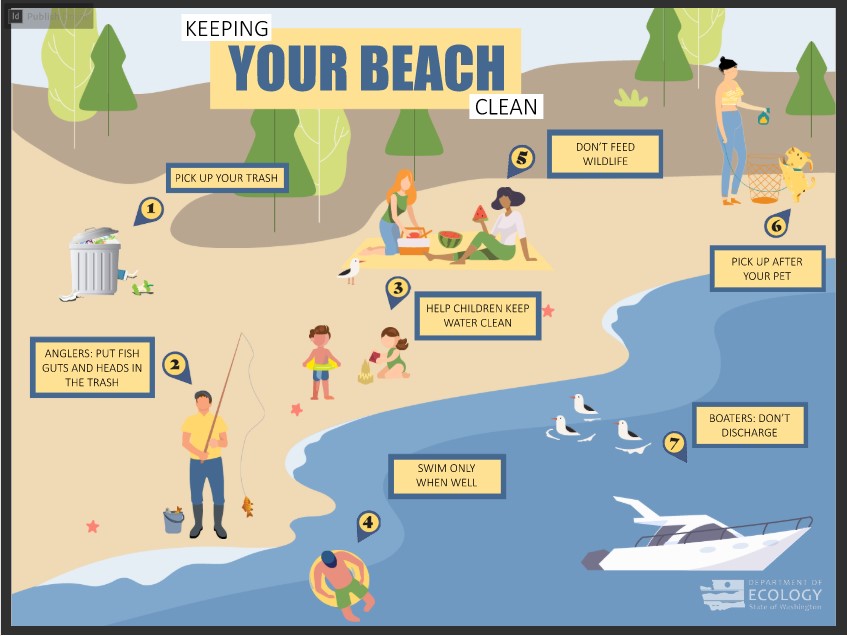
WHY? Pet and animal waste is a major contributor to bacterial pollution in stormwater runoff to streams, lakes and Puget Sound. It is a human-health and environmental-health problem that results in shellfish-bed closures, lake pollution, etc.
HOW? Scoop your pet's poop and properly dispose of it, preferably in the toilet (but not leading to a septic tank) or buried in the back yard. You also can seal the waste in a plastic bag and throw it in the garbage. When walking your dog past other yards, go prepared. Small bag dispensers are available to attach to your dog's collar or leash. Then just carry the used bag to the nearest trash can. Also, in rural areas make sure fences and structures keep cows, horses and other livestock (and their manure) out of streams.
WHY? Vehicles cumulatively contribute more air pollution and carbon dioxide (climate-warming gas) than any other source. In the Northwest, a warming climate appears to reduce our snow pack and water supplies, cause more-frequent damaging storms and has other serious consequences. Washington's worsening traffic congestion also is resulting in more accidents and more time wasted in commutes. As more land is lost to solid pavement and parking lots, the rain and snow-melt run off faster into floods, instead of seeping into the ground to recharge valuable drinking-water and irrigation aquifers. More pavement also means less habitat and agricultural land.
HOW? You can get valuable exercise by walking or biking to work or relax and let someone else do the driving in a carpool, train or bus. You'll also save money on gas and vehicle maintenance. Telework from home, if possible, or work a flex schedule and don't drive on your day off. Use conference calls in place of meetings requiring travel. Research and purchase a fuel-efficient vehicle or join a flex-car program. Flex-cars can save lots of money by reducing gas, insurance and car payments to nearly nothing.
Contact your local city transit system, or visit the RideShare or WSDOT commute and travel Web pages.
WHY? Recycling paper and cardboard saves forest fiber and trees, conserves landfill space and reduces pollution from production. Buying and using recycled paper provides a market for recycled paper. It helps "close the loop" between what you recycle and what you use.
HOW? Call 800-RECYCLE or visit Ecology's recycling site.
WHY? Saves paper (forest fiber and trees) and conserves your file space.
HOW? Set your computer and printer to double-side your copies, or just save data electronically to a hard drive, diskette, CD or memory stick.
WHY? Paper and Styrofoam cups are a "one use" waste of materials and landfill space. Bringing your own mug keeps your beverage warm longer and shows your personal commitment to environmental stewardship.
HOW? Choose a mug, thermos or container you enjoy and carry it with you. Hang it from a strap in your briefcase or bag.
WHY? Saves energy and greenhouse-gas emissions from coal, oil and natural gas.
HOW? Turn down the thermostat a degree or two, or ask your building maintenance staff turn the heat down. Send a memo explaining the change and asking staff to wear warmer clothes. Tell them why these changes are being made, but don't let the room get too cold (below 68).
WHY? Not only will this lower your energy bills, but energy production from coal, oil and natural gas is one of the leading causes of greenhouse gases contributing to global climate change. In the Northwest, these climate shifts appear to reduce our snow pack and water supplies, cause more-frequent damaging storms and have other serious consequences.
HOW? The old adage "turn off the light when you leave the room" is still good advice. Turn off your computer when not in use for several hours or more. (According to Lawrence Berkeley National Laboratory, modern hard disks are not significantly affected by frequent shut-downs as the older models were.) Install compact fluorescent lights that last longer and use less electricity. Shut down office machines at the end of the day and use power-saver modes.
WHY? As population pressures grow in our state, livability is increasingly challenged. The executive order on sustainability for state operations encourages building, transportation, paper use and energy-use practices that support a sustainable environment, economy and society for Washington. These actions are not limited to state offices. Others can benefit from employing these practices, especially as prices come down in the volume of state use. Many of these practices also save money in the long run.
HOW? Meet or exceed the best management practices encouraged in the executive order establishing sustainability and efficiency goals for state operations. Use the high performance standards of the new green-buildings law, which makes Washington the first state to require new public buildings meet “green building" standards of energy efficiency, water conservation and other environmental standards. You can find more information on Ecology's Web site.
WHY? Growing numbers of people are using wild lands, and the pollution
they leave behind can add up, damaging habitat and reducing the beauty
of the area you came to enjoy.
HOW? Pack out all trash; don't litter. Dispose of human waste properly. Use designated trails to preserve the beauty of Washington parks and wild lands. Do not drive off-road vehicles through streams or rivers, as this can crush salmon nests, damage gravel beds and cause suffocating erosion down stream.
WHY? Every year wildfires ravage huge swaths of Washington forests and rangelands. While some fire is naturally caused by lightening and natural to the ecosystem, many of these fires are human-caused. In drought years, moisture in the trees and soil is so low that fires burn very hot, fast and far. It can be a painful surprise to see how fast that little flame towers into a raging forest fire, not to mention fines for starting the fire. Not only is the forest damaged, but local people can lose their homes and livelihoods. Even roadside burns can escape into something bigger in dry summers. And did you know that there's a $1,025 penalty for tossing a lit cigarette on the ground?
HOW? Check the fire danger with your local fire department or ranger station before you go into the woods, or check Department of Natural Resources' county burn-risk Web site. Bring small camp stoves and set them up carefully to avoid ignition of nearby materials. Never throw cigarettes or smoking materials from your vehicle, especially in summer. Not only can you start a fire but you could be fined up to $1,025!
WHY? Vehicles can account for a lot of air and water pollution, but less so if they are well-maintained.
HOW? Maintain with regular tune-ups and fix fluid leaks. Recycle used oil and dispose of oil filters and antifreeze properly. Call 800-RECYCLE or check Ecology's Web site for locations. Never pour anything but clean water down a storm drain, since most drains go straight to streams or rivers. Get vehicle-emission checks in designated areas. Close the loop by using re-refined oil. Wash your car at an approved commercial car wash that recycles its water. If you do wash your vehicle at home, park it on gravel or grass and use a shut-off hose nozzle and phosphate-free soap. Keep litter bags in the car and use them.
WHY? As more people come to enjoy the water, more boats add to the cumulative pollution and pressure on formerly pristine waters. A growing number of lakes and rivers require clean-up plans and Puget Sound shows troubling evidence of decline.
HOW? Keep your boat motor well-maintained to help reduce pollutants from the exhaust and fluid leaks. Use low-phosphate cleaners when detailing the boat to reduce polluted runoff that causes overgrowth of aquatic weeds and algae. Remove plants and aquatic life from your boat, trailer and accessory equipment before leaving the boat launch area to avoid spreading invasive weeds from one water body to the next. Use sewage pump-out stations and always keep engine oil out of the water. Prevent marine debris that harms wildlife by stowing all your litter (and maybe even picking up some that others left behind).

WHY? Many of our streams are degraded and in need of restoration, not just for fish, but for the health of the whole watershed system. As salmon return to streams, they bring essential nutrients from the sea and deposit them in the watershed when their bodies decay after spawning. Restoring a stream for fish improves the health of the stream and surrounding area for all the life that depends on that part of the watershed. It also improves flood protection in many cases. Many local Stream Teams or Watershed Steward programs teach people of all ages how these systems work and engage them in restoration activities such as monitoring, tree planting, cleanups and community education - and it's fun! There are many opportunities for family and friends to participate together.
HOW? Contact your local county WSU Cooperative Extension office and ask for information on local Stream Teams or Watershed Steward Programs. Or look in your local phone directory for city and county contact numbers.
HOW? Check with your local newspaper or radio stations. Visit the Seattle Aquarium Web site for more information. Salmon festivals are also held in Leavenworth, Stillaguamish and numerous other watersheds.
WHY? Because a "sense of place" is important to understand the implications of local decisions and opportunities that affect your own community and its environment. Most people live in Washington because they value this place and its quality of life. Be an informed citizen as change takes place and participate in local decisions.
HOW? Watch the newspaper for local announcements and events. Read the local section and environmental column. Visit the Web site of your local radio station for local events, or Department of Ecology's Public Events Calendar. Attend community workshops, meetings and hearings. Become informed, participate and let your voice be heard.
WHY? Because now that you have become informed, you can see the value of others in your community becoming involved, too.
HOW? Invite cooperative extension, Master Gardeners, conservation district or 4-H Club to talk to your group about volunteer opportunities. Organize a field trip or nature walk for your group to help the members understand the importance of natural habitats and the effects of their actions on the environment. Be a voice for what you have learned and encourage others to take action, too.
Seasonal Enviro-tips: | Winter | Spring | Summer | Fall |
Copyright © Washington State Department of Ecology. See http://www.ecy.wa.gov/copyright.html.