Program Template photo identifier

Air Quality Program

Washington Clean Car Information

Washington and other states have adopted California’s vehicle emission (“clean car”) standards. But Washington could not implement the greenhouse gas standards until EPA gave California a waiver from the national standard, allowing them to further reduce emissions of greenhouse gases from new cars, light-duty trucks, SUVs, and passenger vans. EPA approved California's request for a waiver on June 30, 2009. 

Greenhouse gas emissions from vehicles are a major cause of climate change in Washington State. Greenhouse gases include carbon dioxide, methane, nitrous oxide, hydrofluorocarbons, perfluorocarbons, and sulfur hexafluoride.

Now that we can fully implement California's standards, we expect to reduce greenhouse gases in Washington by about 5.5 million metric tons by 2020. That’s like removing 1 million cars from Washington’s roads and highways.

 Washington’s standards won’t be fully implemented until California finishes making some changes to its requirements. When California does that, Washington will update its standards. 

The following information applies to other vehicle emission standards that took effect in 2008. These “clean car” standards reduce emissions of non-greenhouse gases, such as formaldehyde and benzene.

Buying a new car? Here are some things you need to know!

Starting with 2009 models, new cars, light-duty trucks, SUVs, and passenger vans must meet strict clean air standards. New vehicles that don't meet these clean car standards cannot be registered, licensed, rented, or sold for use in Washington.


Contents:

Learn what Washington's new clean car law means to you.

See a list of the clean cars you can buy.  (Slow link -- please be patient.)

Go even cleaner! Find and buy the cleanest cars available.

California Air Resources Board Information

Drive Clean

For information about registering your vehicle in Washington, go to the Department of Licensing Web Site

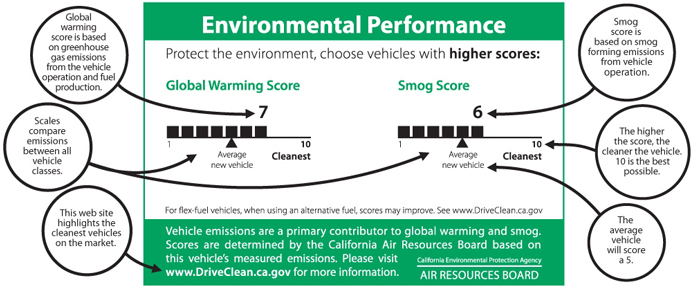
Click on picture at right for full-sized poster.

What is the Clean Car Law?
What does this mean to me?
What do I have to do differently?
What if I buy a vehicle out of state?
Why do we have this law?
Why is this important?
When do new cars have to start meeting clean car standards?
Will it be harder to find the car I want now?
Which cars are available?
Are we the only state doing this?
Which cars are the cleanest?
What are emission standards?
What are Washington’s emission standards?
Why does Washington use California’s vehicle emission standards?
How can I find a clean car to buy?
How can I drive “cleaner”?
What is the Environmental Performance Label?
How can I get more information?


What is the Clean Car Law?

Starting with 2009 models, new vehicles must meet strict clean air standards to be registered, leased, rented, licensed, or sold for use in Washington. This includes cars, light duty trucks, and passenger vehicles (SUVs and passenger vans).

New vehicles that do not meet clean car standards cannot be registered, licensed, rented, or sold for use in Washington.

What does this mean to me?

The new law means that some new car models will not be legal for use in our state.

It also means that, if you buy a car out of state that does not meet Washington’s clean air standards, you will not be able to register, license, rent, or sell it for use in Washington.

What do I have to do differently?

If you buy a car in Washington, you don't have to take any action, other than to be informed about these changes. Auto makers must deliver vehicles to Washington that meet clean car standards. Auto dealers may only sell, rent, or lease vehicles for use in Washington that meet these standards.

If you buy a car out of state and want to bring it into Washington, you need to make sure it meets Washington’s standards.

What if I buy a vehicle out of state?

It is YOUR responsibility to make sure your new car meets Washington’s standards, no matter where you buy it!

At least 12 other states, including Oregon and California, have the same clean car laws as Washington. If you buy a new 2009 model car in those states, it should meet Washington’s standards.

However, if you buy a car in another state that uses the federal emission standards, you will not be able to register, license, rent, or sell it for use in Washington.

Why do we have this law?

The Washington State Legislature passed this law to reduce air pollution and greenhouse gases from cars and trucks.

Why is this important?

Motor vehicles cause most of the air pollution in Washington. Air pollution causes health problems and contributes to climate change.

Health problems: Air pollution causes cancer, asthma and other illnesses. More than half of Washington's residents have at least one medical condition that is made worse by air pollution.

Besides causing health effects, air pollution hurts our economy. Deaths and illnesses from air pollution cost Washington at least $500 million each year.

Climate change: Motor vehicles and other types of transportation also cause more than half of the greenhouse gas emissions in our state. Greenhouse gases cause climate change. Effects of climate change in Washington include reduced snow pack, low summer stream flows, more winter flooding, increased coastal erosion, less water for people and agriculture, and further loss of salmon habitat.

When do new cars have to start meeting the new clean car standards?

It starts with 2009 model year vehicles. Any 2009 or newer vehicle must meet clean car standards.

Will it be harder to find the car I want now?

You may not be able to find certain models. But because California, Oregon, and many other states have similar laws, most auto makers are making cars that meet clean car standards.

Which cars are available?

Most models will still be available. See a list of the clean cars you can buy.

Are we the only state doing this?

No! California, Oregon, and a growing number of other states also have clean car standards.

Which cars are the cleanest?

The amount of pollution a car puts into the air depends mainly on which emission standards it meets. (See “What are emission standards?” below.) It can also be affected by how you drive and maintain the car, how much fuel the car uses, and the kind of fuel used.

Passenger cars must meet certain fuel mileage standards. Generally, the better the fuel mileage, the “cleaner” the car. For example, smaller cars typically get the best fuel mileage, which also means they pollute less.

Light trucks – which include vans, small pickup trucks, and sport utility vehicles (SUVs) -- are allowed to get lower fuel mileage than passenger cars. As a result, the average light truck pollutes more than the average car.

Some of the heaviest light trucks, such as large SUVs, do not have to meet any mileage standards. They are among the most polluting vehicles.

What are emission standards?

Emission standards limit the amount of pollution coming from a vehicle. All new vehicles for sale in the United States meet either federal emission standards (set by the U.S. Environmental Protection Agency), or California standards (set by the California Air Resources Board). The California standards are stricter than the federal standards.

What are Washington’s emission standards?

Washington recently adopted the California standards, which are stricter than the federal standards. Starting with 2009 models, new vehicles must meet these strict clean air standards to be registered, leased, rented, licensed, or sold for use n Washington.

Why does Washington use California’s vehicle emission standards?

Adopting California’s vehicle emission standards complies with the federal Clean Air Act by not creating a new third standard for vehicle emissions. Adopting California’s rules allows us to protect the environment while minimizing the burden to the automotive industry. Having standards identical to those in neighboring states such as California and Oregon makes it simpler for consumers to purchase vehicles across state lines. The common standard also saves taxpayers’ money by not creating a new system when a program that accomplishes our goals is already available.

How can I find a clean car to buy?

You’re in luck – the state of Washington has made it very easy for you to find the cleanest cars available. Starting with 2009 models, only cars that meet the strict clean car standards can be leased, rented, licensed, or sold for use in Washington.

See a list of the clean cars you can buy. (Slow Load)

Tips to help you drive “cleaner”

  • Keep your car well maintained. A poorly maintained engine both creates more air pollution and uses more fuel. Replace oil and air filters regularly, and keep your tires properly inflated.
  • Drive less. In these days of high gas prices, carpooling, walking, bicycling, riding the bus, or working from home can save you money as well as reducing air pollution.
  • Don’t idle your vehicle. If you stop for more than 30 seconds, except in traffic, turn off your engine. Idling for a total of 10 minutes a day uses an average of about 22 gallons of gas per year, as well as polluting the air. By turning your car’s engine off when it isn’t moving, you’ll save money on gas and you and others around you, including children and people with respiratory problems, won't have to breathe unhealthy exhaust fumes.
  • Don’t buy more car than you need. Four-wheel drive, all-wheel drive, engine size, vehicle weight, and tire size all affect the amount of fuel your vehicle uses. The more fuel it uses, the more air pollution it causes.

What is the Environmental Performance Label?

The Environmental Performance (EP) label is a label that is displayed on new vehicles for sale. The label provides global warming (greenhouse gases) and smog emissions scores for new automobiles. The scoring system allows consumers to compare the vehicle’s greenhouse gas and smog emissions to other models. Better-educated consumers can then make more informed decisions that include climate change impacts when purchasing a vehicle.

More information

Ecology is in the process of updating Washington’s clean car regulations. The clean car law requires Ecology to “amend the rules from time to time, to maintain consistency with the California motor vehicle emission standards.” This update will incorporate the small changes in California’s standards since Ecology wrote the clean car regulations in 2005. The most significant change will be requiring the Environmental Performance Label to be displayed on all new vehicles for sale in Washington.

Find information on:

If you have questions, call or email: