

Better Brakes
We oversee the implementation of Washington's Better Brakes Law, which phases out the use of copper in vehicle brake pads and shoes by 2025. It also bans the use of asbestos and several heavy metals. As brake pads wear down, copper and other metals are deposited on roadways and then washed into streams, rivers, lakes and Puget Sound. Copper is highly toxic to salmon and other aquatic species.
The Better Brakes Law
In 2010, the Legislature passed a law to reduce the use of toxic material in vehicle brake pads and shoes (Chapter 70A.340 RCW). This law restricts the use of several heavy metals and asbestos, beginning in 2015, and provides a schedule to phase out copper. Vehicle brake pads manufactured after 2021 must contain less than 5 percent copper by weight. By 2025, brake pads must contain less than 0.5 percent copper.
Why copper?
Although the Better Brakes Law requires manufacturers to reduce or eliminate several toxic chemicals, the major focus is copper. As brake pads wear down, copper and other metals in brake dust are deposited on roadways, where they are washed into streams and rivers.
Copper is highly toxic to fish and other aquatic species. It interferes with their sense of smell, making them more vulnerable to predators. It also reduces their ability to return to their spawning streams. Young salmon are especially susceptible to the effects of copper.
Primary sources of copper in the environment are household pesticides, water pipes, and vehicle brake pads. In urban areas, brake pads account for up to half of the copper entering our waterways — 66 tons (60,000 kilograms) of copper a year enters Puget Sound from vehicle brake pads. When Washington's Better Brakes Law is fully implemented in 2025, this source of copper will be virtually eliminated.
Look for the leaf
The Brake Manufacturers Council adopted the LeafMark to inform customers whether a brake pad meets the Better Brakes standards. The darker the leaf, the more levels of compliance the pad meets:
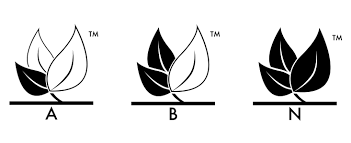
- Level A: limits levels of asbestos, cadmium, chromium, lead, and mercury.
- Level B: includes all the requirements of Level A and copper levels must be less than 5 percent by weight.
- Level N: includes all requirements of Level A and copper levels must be less than 0.5 percent by weight.
Brake pads meeting the Level N copper standard are already available for many vehicles. When replacing the brake pads on your car or truck, we highly encourage you to ask about these low-copper products.
Major provisions of the Better Brakes Law
- Brake pads and shoes manufactured after Jan. 1, 2015, must not contain asbestos,hexavalent chromium, mercury, cadmium, or lead.
- After Jan. 1, 2015, auto shops and other distributors of brakes can sell their existing inventory for 10 years.
- Brake pads manufactured after Jan. 1, 2021, must not contain more than 5 percent copper by weight.
- Starting in 2025, brake pads containing more than 0.5 percent copper by weight may not be sold in Washington.
Our role
- Beginning in 2015, we reviewed current research and consulted with a committee of industry experts. It was determined that alternative brake friction materials containing less than 0.5 percent copper were available, meaning that a complete phase-out of copper was feasible.
- Brake manufacturers must certify to Ecology that their brake pads and shoes comply with the law, using tests from accredited laboratories, and show proof of certification on all pads and packaging offered for sale in Washington.
- We will track data provided by manufacturers to ensure concentrations of nickel, zinc, and antimony in brake pads do not increase by more than 50 percent.
A cooperative effort and national model
In implementing the Better Brakes Law, we worked closely with brake manufacturers, retailers, distributors, and environmental groups. We also worked with California because they have a similar law.
In January 2015, the manufacturers signed a memorandum of agreement with the United States Environmental Protection Agency and the Environmental Council of the States to adopt standards based on Washington’s and California’s brake laws. This means that every new brake pad sold in the United States will meet Washington’s standards for copper and other toxic chemicals.
By working together on the Better Brakes program, Ecology and brake manufacturers were able to agree on an approach that protects the public and the environment. Since manufacturers sell their products globally and have relatively long product design cycles, these changes will have far reaching benefits.
Further, brake manufacturers are reporting that they are on track to beat the target dates for implementing the Better Brakes Law.
Related links
Contact information
Kathleen Gilligan
Safer Products Compliance Specialist
kathleen.gilligan@ecy.wa.gov
360-764-0594