

Dangerous waste containers
- Compatible with the waste inside.
- Properly labeled.
- Stored correctly (i.e., out of the weather, properly spaced) with secondary containment (for liquids).
- Inspected weekly (when stored in central accumulation areas).
You are also required to:
- Adhere to accumulation volume and time limits.
- Keep records of central accumulation area weekly inspections for at least 5 years.
How to manage dangerous waste containers
Keep containers of dangerous waste:
- Closed, except when adding or removing waste, or to temporarily vent a container in a satellite accumulation area (SAA).
- Covered and out of the weather.
- Spaced with at least 30 inches between rows of containers.
- Separate from incompatible wastes or products.
- Stored in a central accumulation area (CAA) or satellite accumulation area (SAA)
- Inspected. You must do weekly inspections of CAAs, which includes inspecting your dangerous waste drums and containers stored there.
Inspect your dangerous waste drums poster
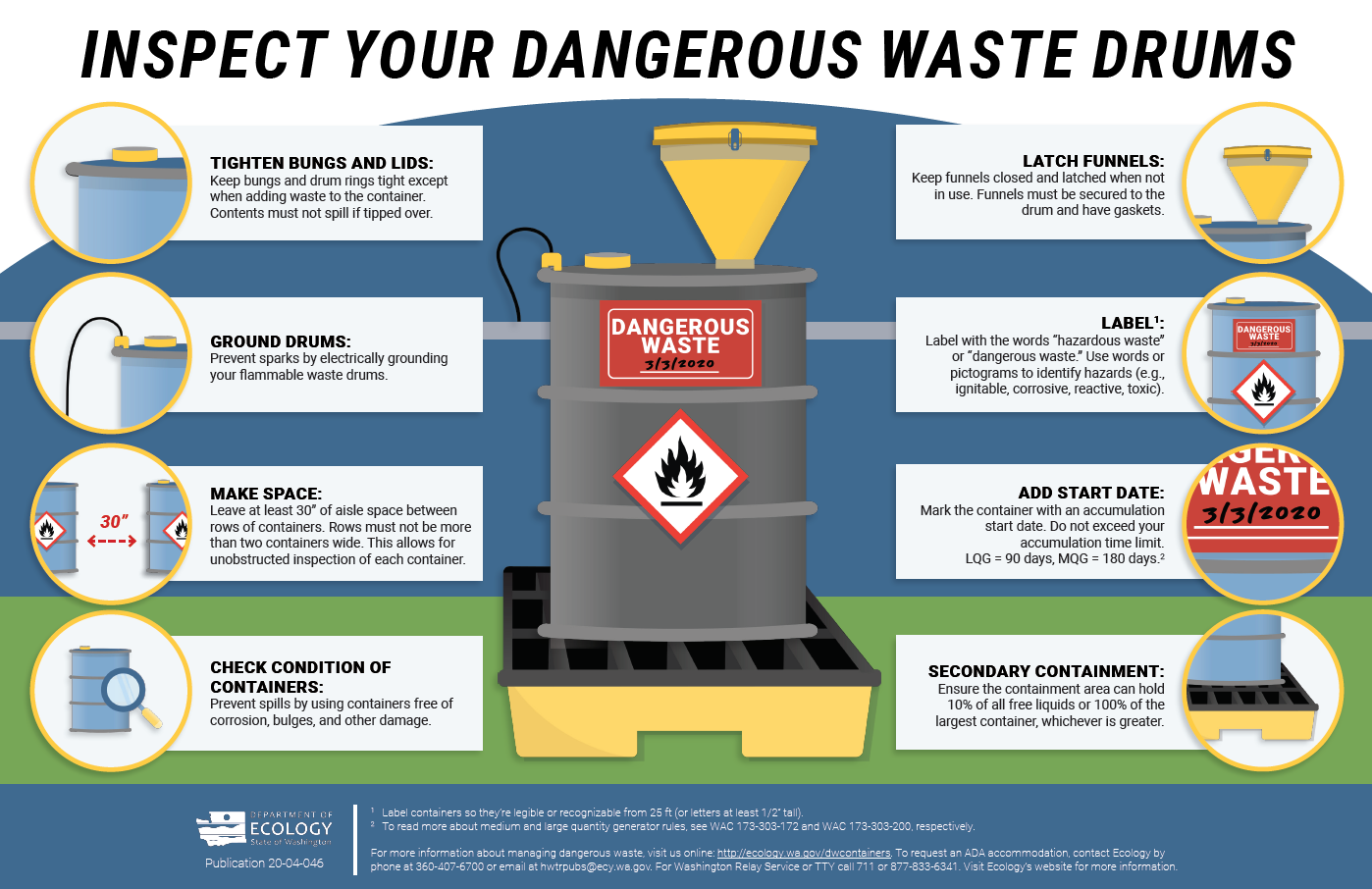
Spanish version:
Inspeccione sus tambores de desechos peligrosos
How to choose the right container
Containers must be:
- Made of material that is compatible with the waste (including the lids).
For example:- For corrosive wastes: Use polyethylene containers rather than metal drums.
- For flammable wastes: Use a steel container that can be bonded and grounded.
- Intact (no holes, leaks, or other structural defects).
- Free of severe corrosion.
- Handled and stored in a manner which doesn’t cause the container to rupture or leak.
- Labeled correctly.
How to properly close containers
Containers with dangerous waste must be closed, except when adding or removing waste.
Closed means a container is shut tightly enough that:
- Contents cannot spill if tipped over.
- Chemical vapors cannot escape into the air.
Also make sure that:
- Lids are on.
- Drum rings are latched.
- Bungs are closed.
- Funnels, if used, are latched and securely screwed into the containers.
Open vs. closed containers
Open containers are one of the most common violations our inspectors find. Click the video or go to Dangerous Waste Containers: An Open and Shut Case to learn more.
Please note: Some guidance in this video is outdated since we adopted the EPA’s Generator Improvements Rule in 2019. A full list of updated citations is listed on YouTube.
What wastes require secondary containment?
The following wastes in CAAs must have secondary containment:
- Liquid dangerous wastes.
- Solid ignitable dangerous wastes.
- Solid dioxin-bearing dangerous wastes.
- Solid reactive dangerous wastes.
What is secondary containment?
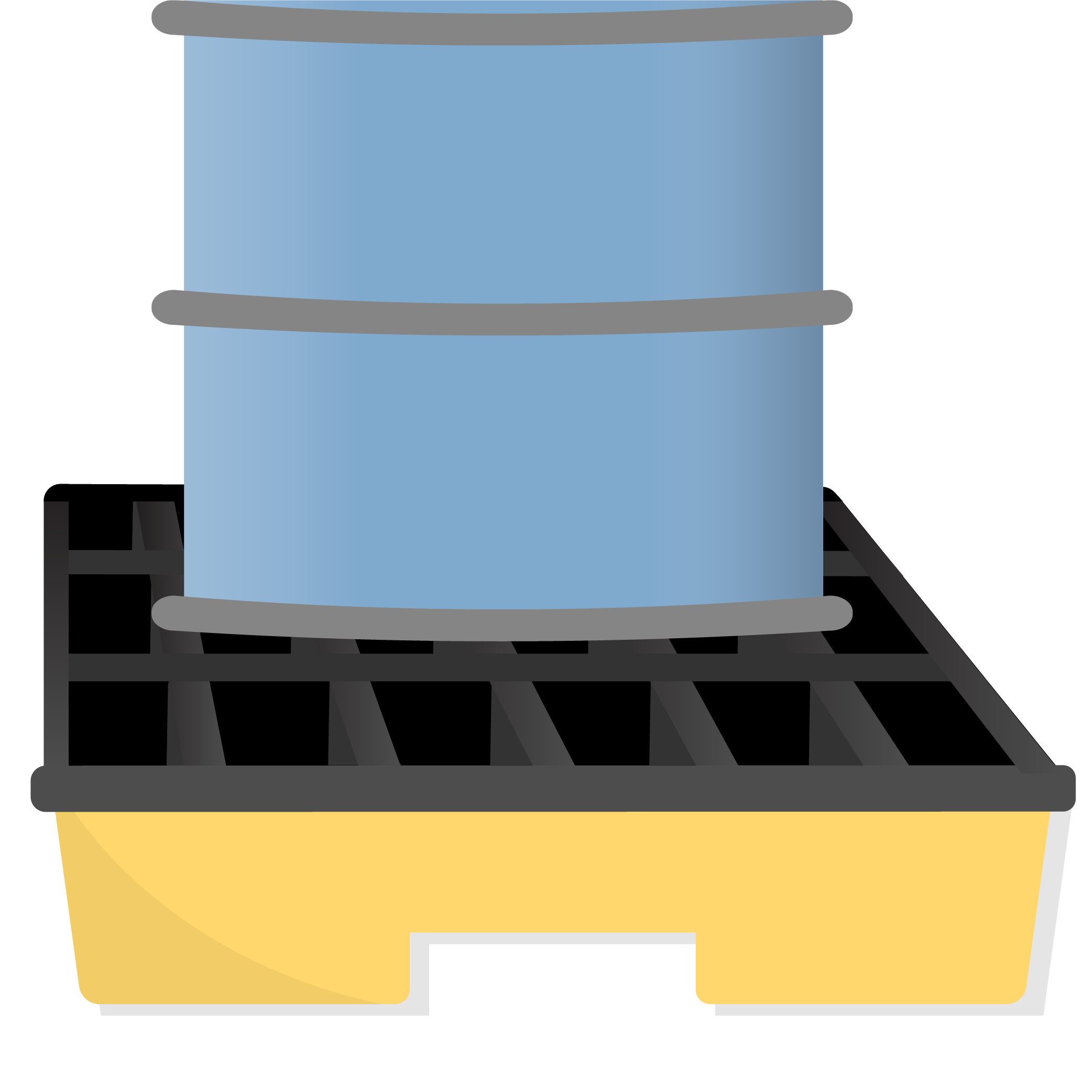
Secondary containment prevents spills and leaks from reaching the environment. Common types of secondary containment for dangerous waste containers include:
- Sloped concrete floors that are free of cracks, gaps, and are impervious to contain leaks, spills, and accumulated rainwater.
- Commercially available portable units such as containment or spill pallets which typically accommodate one to four 55-gallon drums.
Regardless of the containment system you use, ensure it’s designed to drain and remove liquids or otherwise protect containers from potentially sitting in accumulated liquids.
Secondary containment must be large enough to contain whichever is greater of the following:
- 10% of the total volume of all containers holding liquid within the secondary containment,
OR - 100% of the volume of the largest container holding liquid.
When using concrete secondary containment:
- Add curbing or lined diked areas around the containers.
- Apply a protective coating or sealant to the concrete.
- Build a containment system with as few joints as possible.
- Ensure the base of the containment system is sloped to drain any spills away from the containers or elevate the container (e.g., place it on a pallet).
If you operate a CAA that collects precipitation, review additional containment system requirements (WAC 173-303-630(7)).
Related links
Contact information
Need help?
Contact a dangerous waste inspector in your region.