

Generator category
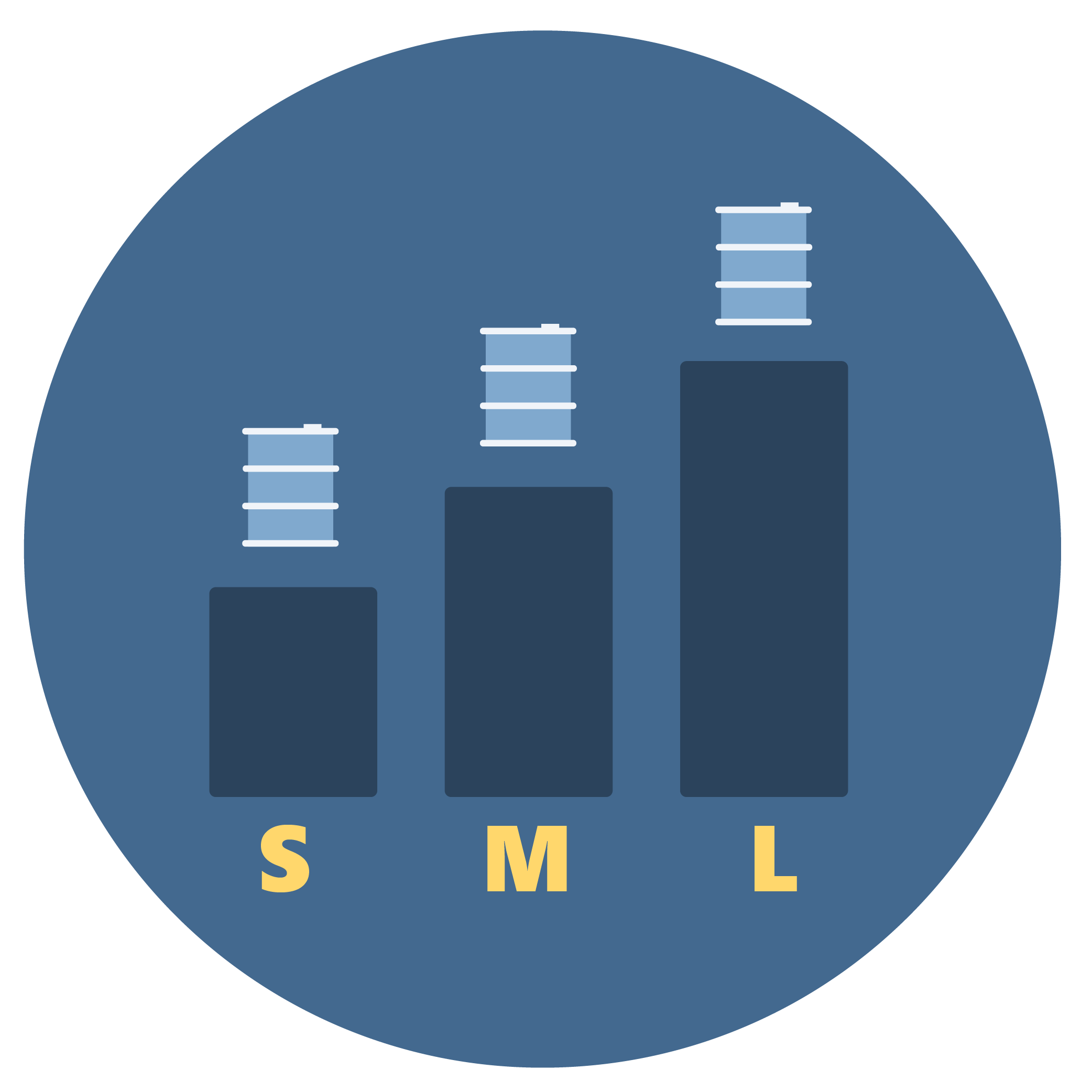
- Small quantity generators (SQGs).
- Medium quantity generators (MQGs).
- Large quantity generators (LQGs).
The amount and type of dangerous waste you produce in a calendar month determines which regulations apply. Your generator category may change from month to month.
How to determine your generator category
Step 1: Designate your waste.
This process helps you figure out what type of waste you have, including waste codes.
Step 2: Count your waste.
Total the amounts of the following:

*EHW = extremely hazardous waste (code WT01); AHW = acutely hazardous wastes that are toxic in small amounts (all P-listed and some F-listed waste codes: F020, F021, F022, F023, F026, F027).
**Spills include residue, contaminated materials from cleanup of highly toxic EHW or AHW waste spilled to land or water.
Step 3: Compare quantity exclusion limits (QELs) against your count to determine your monthly generator category. Use the QEL chart below to make this determination.
Quantity exclusion limits (QELs)
A QEL is a monthly weight limit that determines your generator category based on the amount and type(s) of dangerous waste you generated that month.
QEL chart to determine your generator category
Use this chart to determine your monthly generator category. If your waste counts fall into more than one generator category, apply the more stringent generator category to your business. For instance, if you generated 200 pounds of dangerous waste, but 2.3 pounds of AHW, then you are an LQG.
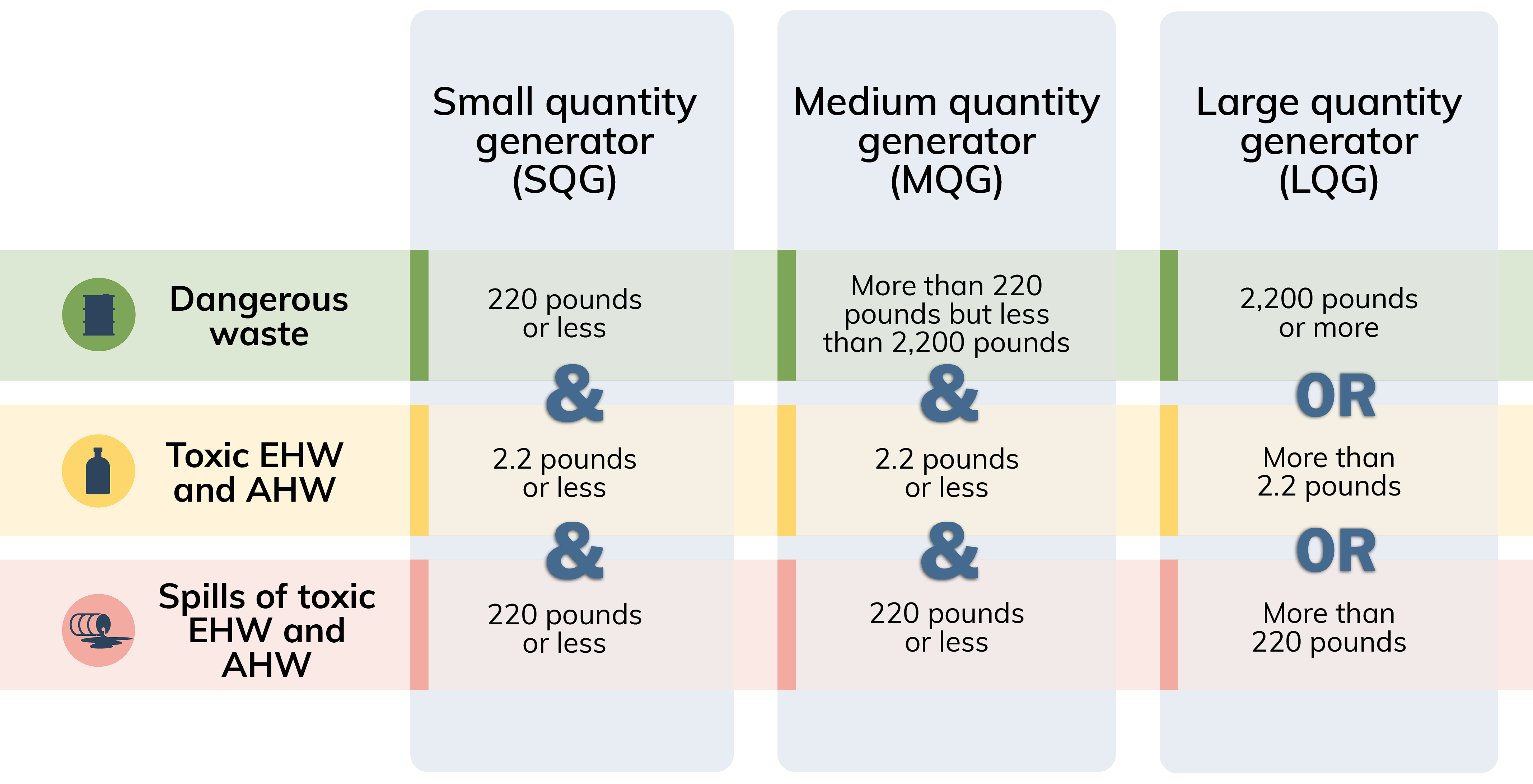
Read a plain text version of the monthly generation limits.
Frequently asked questions
Related links
Contact information
Need help?
Contact a dangerous waste inspector in your region