

Flame retardants
Flame retardants are a group of chemicals made up of several classes of other chemicals. Manufacturers add them to products such as foam, plastics, textiles, and others to meet flammability standards. Some of these chemicals pose health risks as well as impacts on the environment.
We work with the Washington State Department of Health, along with industry and environmental stakeholders, to identify and phase out flame retardants in Washington.
Our work began by evaluating polybrominated diphenyl ethers (PBDEs), a type of flame retardant. Since then, we have investigated others and also searched for replacements for PBDEs.
What are flame retardants?
Flame retardants are a group of chemicals made up of several classes of chemicals, each with diverse chemical and physical properties that influence their effectiveness and use in consumer products.
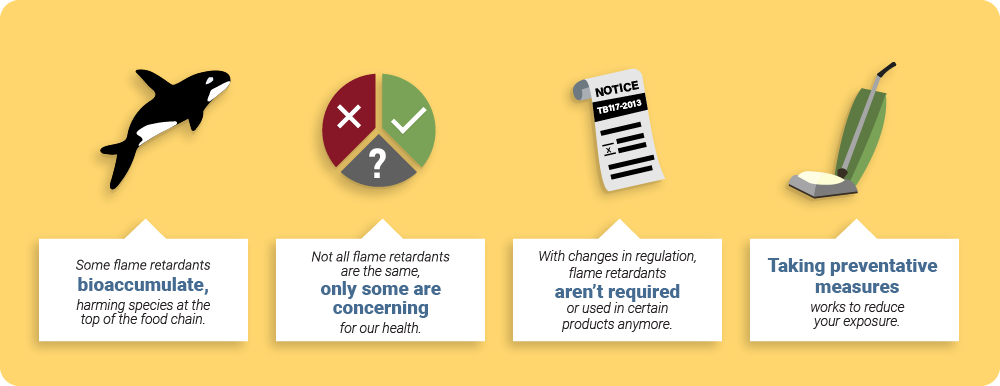
- Some flame retardants bioaccumulate, which can harm species at the top of the food chain.
- Not all flame retardants are the same, only some are known to be concerning for our health.
- With changes in regulation, flame retardants aren't required or used in certain products anymore.
- Taking preventative measures works to reduce your exposure.
What is the purpose of flame retardants and what products contain them?
Manufacturers add flame retardants to foam, plastics, textiles, and other products to meet flammability standards. They are intended to slow the spread of a fire and allow for additional escape time. Many products such as car seats, recreational foam (like what's found in gyms), electronics, tents, and building insulation can contain flame retardants.
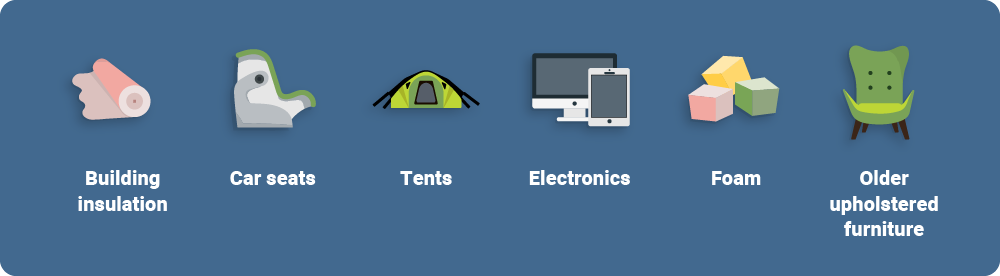
In the past, products like upholstered furniture and some children’s products were often made with materials that contained flame retardants. However, since flammability standards have changed, flame retardants are no longer needed.
How do flame retardants affect health and the environment?
Studies show PBDEs and other flame retardants have been escaping from products and accumulating in people and the environment. PBDEs are found in:
- Human bodies: Breast milk, blood, fat
- Homes: Household dust, indoor air
- Food: Beef, dairy products
- Environment: Fish, wildlife, birds, and sediments
The potential health effects from exposure to flame retardants include:
- Cancer
- Endocrine and reproductive effects
- Neurological and developmental disorders
Consumer products that children are exposed to, like electronics and older furniture, are of higher concern.
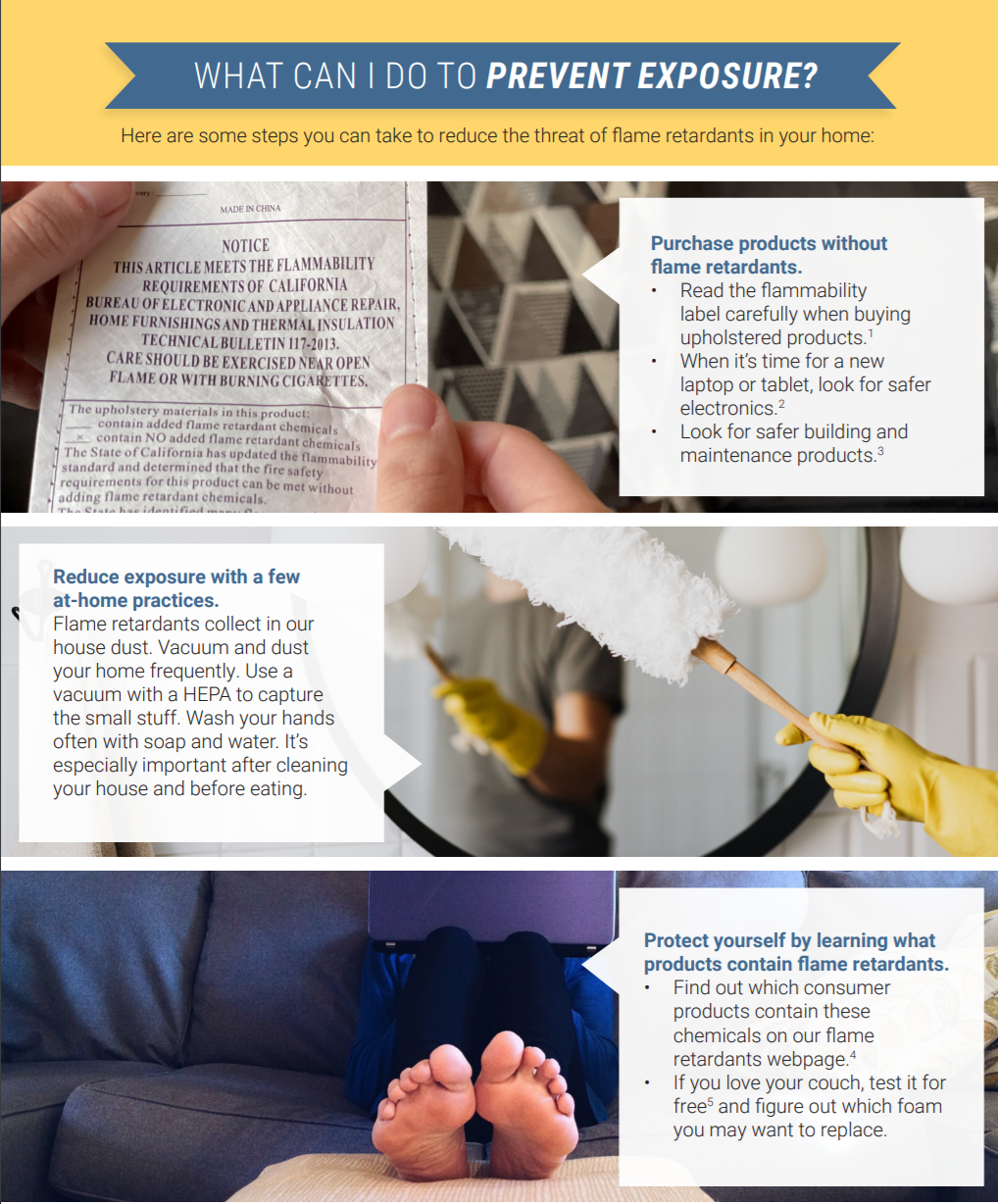
How can you reduce your exposure to flame retardants?
Read our tips on Keeping Your Home and Family Healthy: Reduce Your Exposure to Flame Retardants to learn how to reduce your exposure in your home:
- Purchase products without flame retardants
- Vacuum and dust frequently
- Wash your hands right after vacuuming or dusting
How are we taking action against flame retardants?
Manufacturers voluntarily agreed to stop producing two kinds of PBDEs (Penta-BDE and Octa-BDE) by the end of 2004. Washington was the first state to ban a third kind of PBDE (Deca-BDE). Manufacturers of Deca-BDE agreed to stop producing, importing, and selling it by 2012 in the U.S.
Before the 2011 ban went into effect, we and the Department of Health performed an alternatives assessment to identify a safer and technically feasible alternative that met fire safety standards. In 2016, Washington banned five other flame retardants in children’s products and residential furniture.
Currently, flame retardants are considered priority chemicals under Safer Products for Washington.
Chemical action plan recommendations
The chemical action plan for PBDEs recommends prohibiting their use in specific products, which the Legislature passed in 2008. Our 2015 report to the Legislature added further recommendations:
- Restrict the use of eight flame retardants commonly used in children's products and furniture
- Restrict the use of TBBPA and HBCD in textiles used in children's products and furniture
- Require manufacturers report their use of all flame retardant chemicals used in consumer products
Related links
Contact information
Chemical Action Plans Team
ChemActionPlans@ecy.wa.gov