Clean, green boating
Boat owners play an important role in protecting water quality.
Why do we care about boats?
- Spilling even just a quart of oil, diesel, or gasoline can contaminate acres of water and shellfish beds.
- The hulls on most boats used in marine waters are coated with soft toxic paints that contain toxic chemicals, like copper, that poison aquatic life.
- Sewage holding tanks, when improperly released, threaten the health of people playing in the water or on beaches.
- Soaps and detergents used over water are toxic to aquatic life, especially to threatened and endangered salmon.
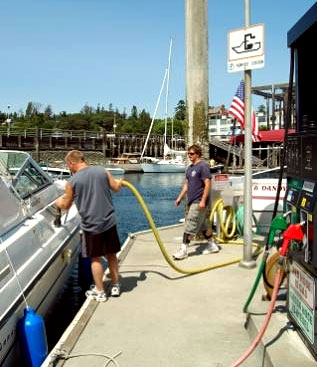
Drips can end up in the water when fuel drips off the nozzle, splashes out of the tank, or discharges out of the vent from over-filling or expansion.
Small spills add up to big problems. Even after the sheen is gone, there still is fuel in the water, and it continues to threaten the aquatic environment. It can kill fish and other aquatic life, and can cause long-term damage to the surrounding habitat.
Small spills add up to big problems. Even after the sheen is gone, there still is fuel in the water, and it continues to threaten the aquatic environment. It can kill fish and other aquatic life, and can cause long-term damage to the surrounding habitat.
- Know how much fuel your tanks hold. Fill only to 90 percent capacity to leave room for expansion, especially during warm weather. Don’t top off your tanks.
- Hold the nozzle when refueling. Don’t use a hands-free clip.
- Use an absorbent pad or fuel collar device around the nozzle to catch drips so they don't spill into the water.
- Watch and listen for cues that your tank is nearing capacity. Stop before any fuel can escape from your tank vents. Have an absorbent pad ready to catch any fuel that escapes.
- Wipe up all spills and drips on deck and dispose of absorbent pads properly.
Contact the U.S. Coast Guard and Washington’s Emergency Management Division whenever fuel enters the water. It’s the law. To report spills, call 800-OILS-911.
Related links
Contact information
Justine Asohmbom
Shorelines and Stormwater Education Manager
justine.asohmbom@ecy.wa.gov
206-594-0009