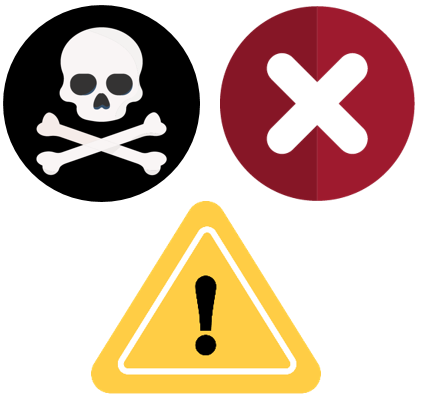
Known toxic chemicals, which is why they come with warning labels like (like poisonous, danger, or warning).
Unregulated toxic chemicals, but many have no label.
Not all chemicals in products are tested or labeled.
Companies can and do use untested, harmful chemicals in products people buy. Even chemicals that studies link to health issues. Our Safer Products for Washington program works to address this gap in oversight.
Learn how you can:
Spot hazardous products (labeled or not).
Choose safer products to buy or make your own non-toxic versions (such as cleaners).
Help our Safer Products for Washington program reduce toxic chemicals allowed in household products.
Store and dispose of hazardous products correctly.
Toxic chemicals get into our home from items such as furniture, carpeting, clothing, cosmetics, cooking utensils, medicines and pharmaceuticals, and many others. Check out our illustrated story map to learn how toxic chemicals in consumer products move from the store, to our homes, to the environment.
How do you know if something at home is hazardous?
Many products come with labels to warn you that they contain harmful chemicals. Look for labels like "Caution," "Warning," "Poison," or "Danger" on things like:
Cleaners and disinfectants.
Drugs, medications, and other pharmaceuticals.
Yard, automotive, and other outdoor products.
Building products.
Electronics, fluorescent lights, mercury thermostats and thermometers.
Many more.
Go to our Healthy home guide page to learn about common hazardous household products and how you can prevent exposure to harmful chemicals.
Are all hazardous products in your home labeled?
No! While some hazardous products are labeled as such, many are not. This includes products that contain unregulated chemicals, many of whichwe now know are:
Toxic.
Potentially hazardous to our health, the environment, and wildlife.
Persistent and build up in the environment.
These harmful chemicals are in a wide variety of products. In fact, you likely have come into contact with many of these products.
There are simple things you can do today to improve the health of your home. Just knowing what is hazardous (whether products are labeled or non-labeled) goes a long way toward taking charge of your home's health.
How do you dispose of hazardous household products?
After a product is used, it can still contain harmful chemicals. If disposed of improperly, toxic chemicals from the product can escape into the environment. Even small amounts of chemicals, when combined, can become major sources of pollution.
We offer free language services about our programs and services for people whose primary language is not English. We can provide written information in your preferred language and interpreters in person or over the telephone.
Hazardous Substance Information and Education Office HSIEO@ecy.wa.gov
800-633-7585
Safer Products for Washington is funded by state legislative funding. The Hazardous Substance Information and Education Office is funded in partnership with the Washington State Department of Labor and Industries by the Worker and Community Right-to-Know Fund.